Creating Characters That Resonate: Some Tips for Memorable Designs
"While tools play a role, it’s our vision that truly matters”
You know that feeling when you see a character from a game, a painting, or a comic and you instantly fall in love with it? It's not just because it looks cool or cute. It's because it has a personality and a story that shines through its appearance. That's what I love about character design: the ability to create characters that make people feel something.
If you are interested in learning the basics of this art form, there are many resources available online 😅. (I will create some tutorials on this soon.) But now I'm not here to lecture you on anatomy or color theory. Instead, I'll share some of my personal tips on how to make your characters unique and engaging for your audience.
Tip 1: Dive Deep into Your Character’s World
Kickstart your design process with inspiration from your own world. This personal touch not only enriches your art but also adds depth and more meaning to your creative process.
Consider this school bully who is based on.. a person I used to know. He’s probably off picking his nose when he’s not on the page! Can you spot him?
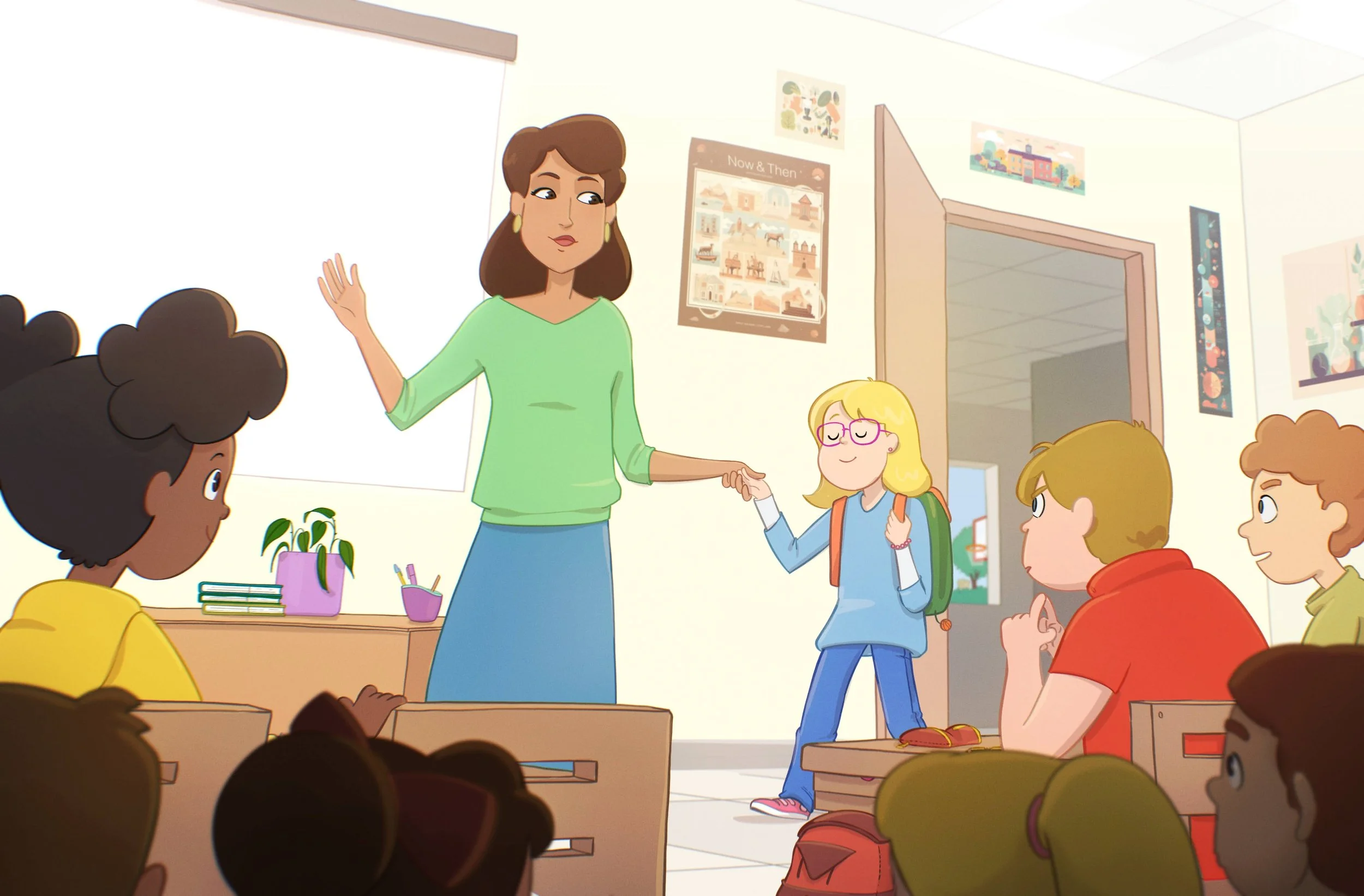
See the bully's backpack 😈? (Illustrated for Swish! by Mahmoud Elzein.)
It’s all about discovering those tiny personal connections that breathe life into a character. Brainstorm with character profiles, create mood boards, and try to figure out “what’s in their pockets”. I’ve found that writing dialogues for my characters helps me visualize their personalities better. Honestly, half the time, I’m imagining how they would annoy each other offscreen!
Tip 2: Play with Shapes to Highlight Inner Conflict
To emphasize a character's inner turmoil, you can use contrasting shapes. By smoothing the edges of sharp shapes, you can reduce the contrast and reveal different aspects of the character.
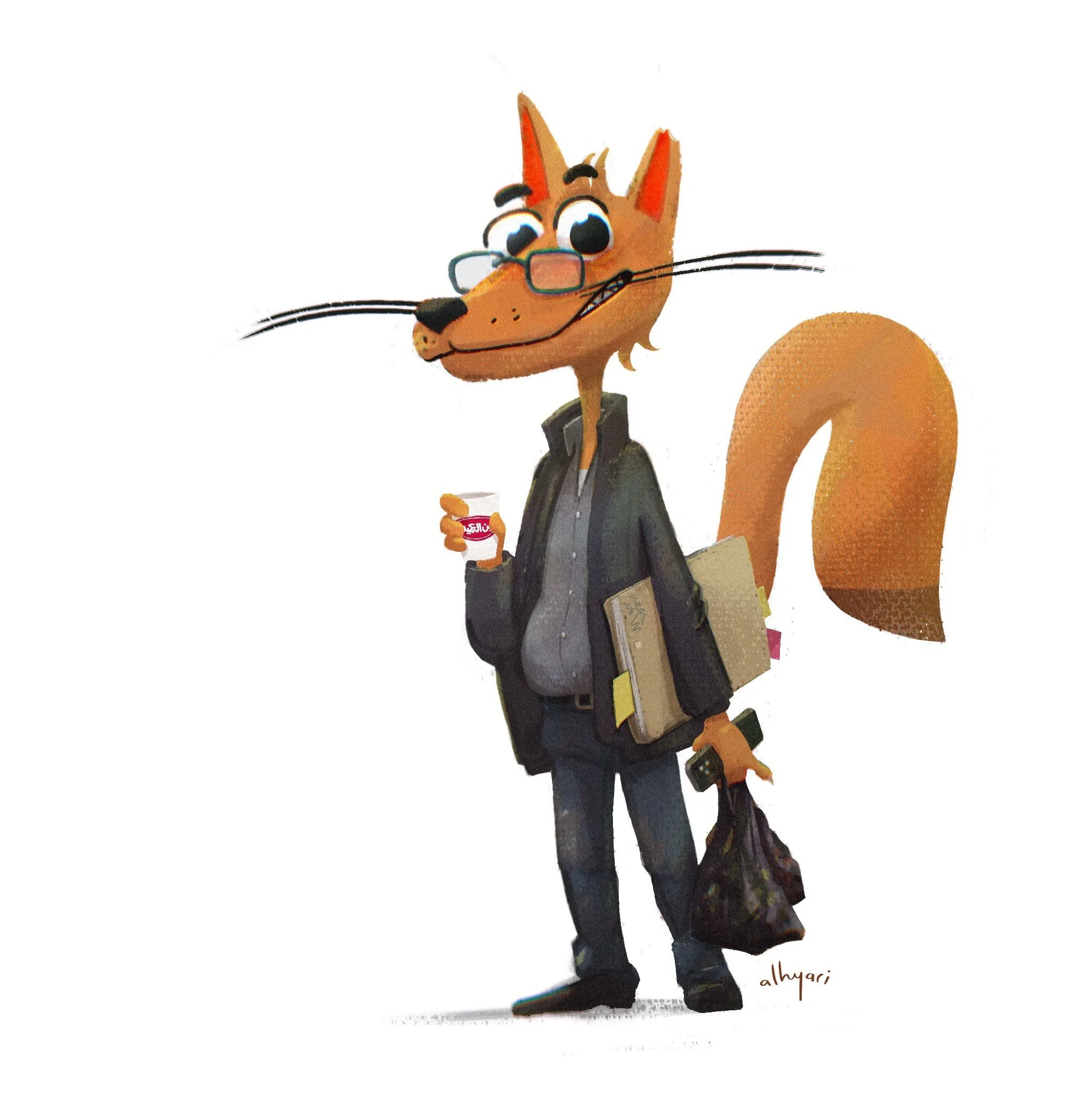
“Good or bad?,” I always ask my students.
Experiment with different sizes and shapes and make your characters captivating enough that your viewers accept the visual logic of your art worlds.
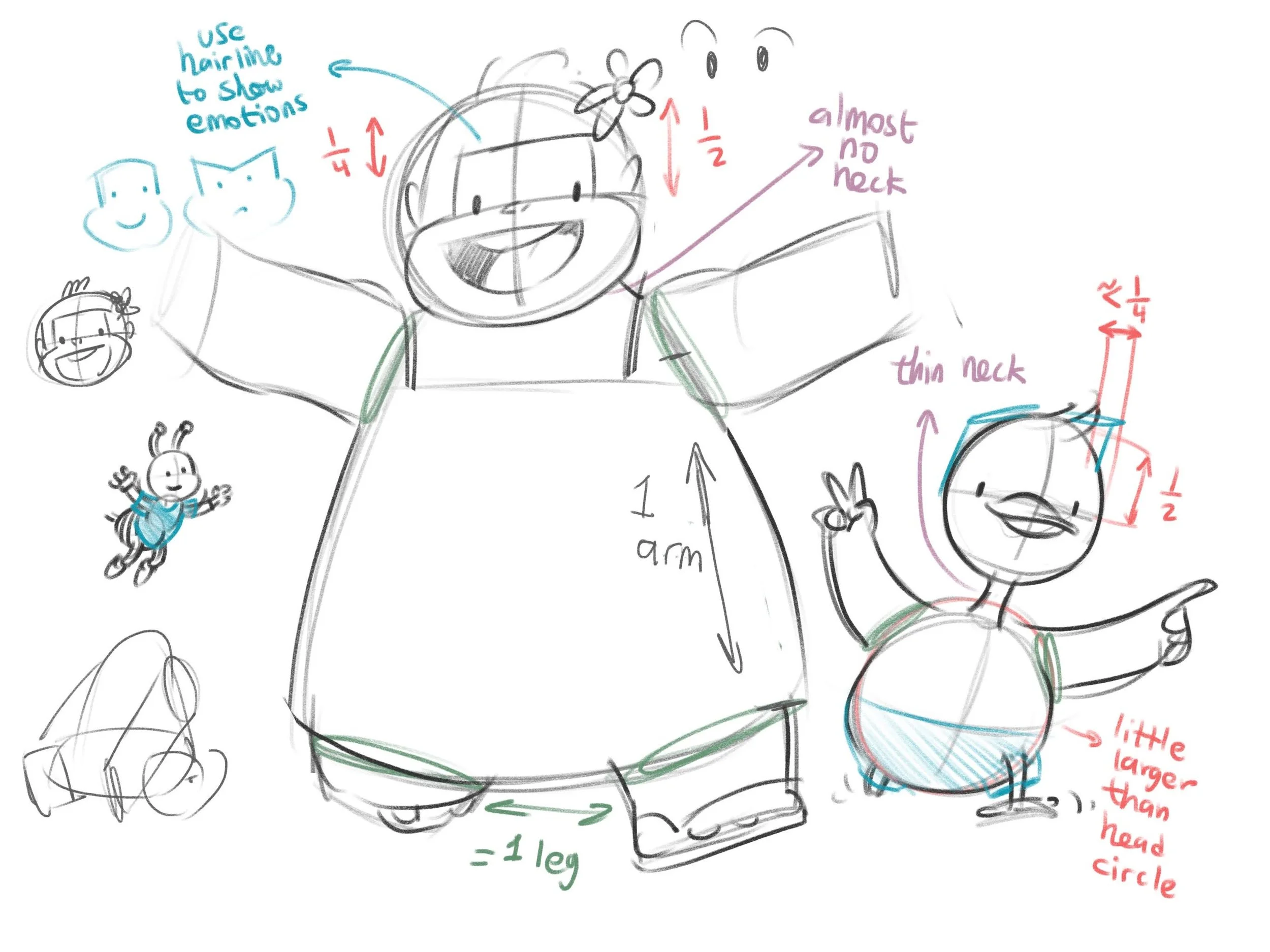
Imagine a gorilla 🦍 and a bee 🐝 as friends in a picture book. How would you draw them in relation to each other?
A good way to enhance the narrative and ease the tension is to break down the character shapes. For example, the bully in Swish! looked threatening at first, but I used his soft facial traits to show his insecurity. I also gave him a loose shoelace to imply that he is not totally in control.
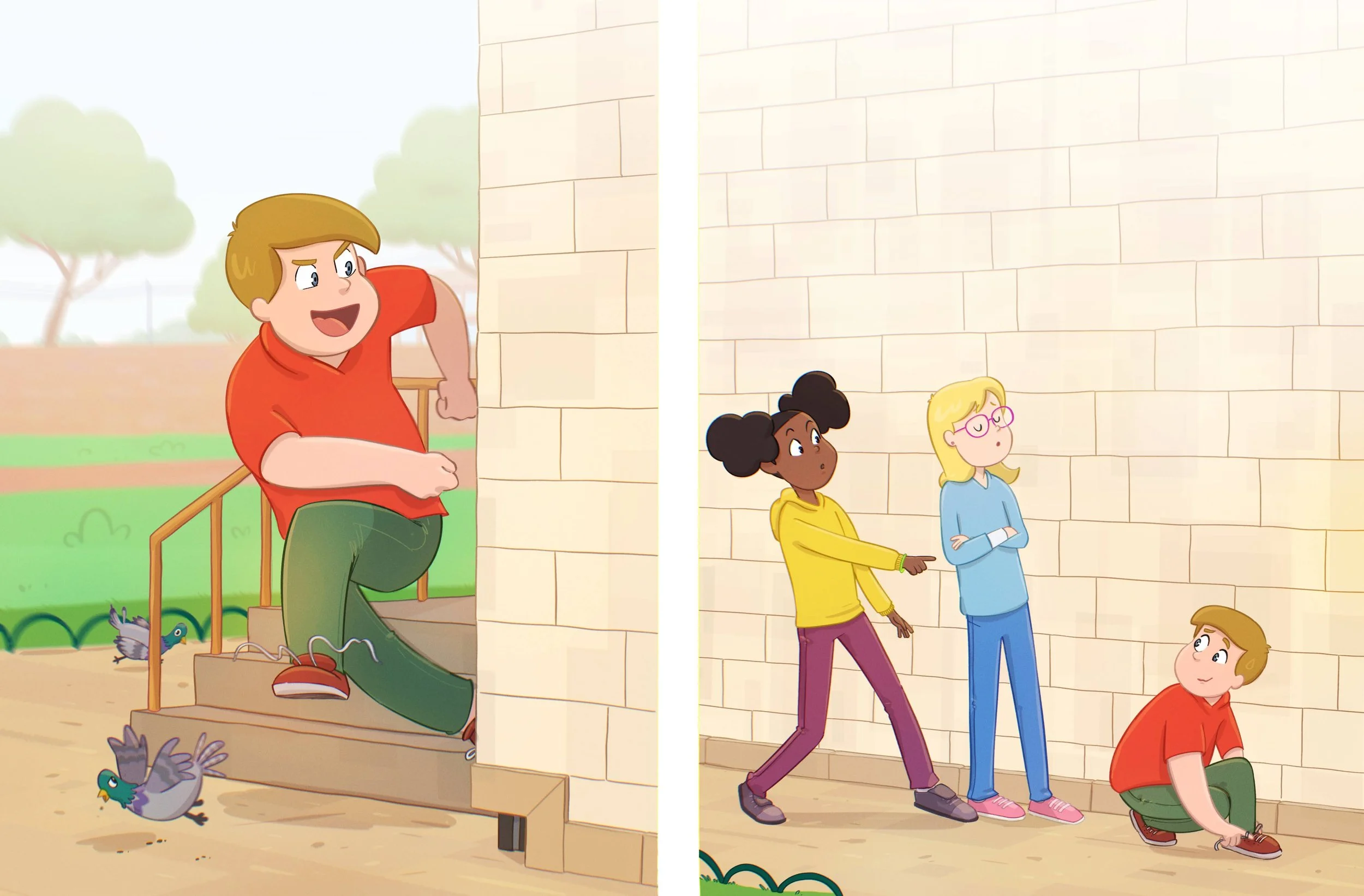
Even the smallest details can tell a story about your character. (Illustrated for Swish! by Mahmoud Elzein.)
Tip 3: Harness the Power of Color and Value
Contrast is key! Opt for vibrant characters against muted backgrounds, experiment with warm and cool tones, and introduce pops of light against deep shadows for visual drama.

Contrast and lighting for drama.
Challenge yourself with limited color palettes. This forces you to think creatively and adds an unexpected layer of unity to your work. For the ‘Museum Heist’ piece, I used shades of blue, and it was gratifying when viewers, even those not from the art world, noticed how it influenced the piece.

The blue tones were a fun challenge 💎
Tip 4: Sprinkle in Details and Accessories
I take sneaky joy in hiding personal details within my illustrations. Maybe it’s my old license plate or a memento from my parents. Details like faded scars and mended clothes add layers to your characters and imply a history, giving them more depth.

Can you find all the hidden secrets in Ella the Gorilla's room? 🔎 Let's play in the comments! (Book by Mawya Alfadda and Rama Al-Sahreef)
Tip 5: Push the Boundaries with Expressions
Imagine yourself as the director of the scene and your characters as the actors. Hire the best actors and make sure they come with the best: pose, gestures, and outfit, and nail the whole performance.
Don’t just copy the reference! Exaggerate those eye positions, play with asymmetrical half-expressions – this keeps things lively and adds charm.
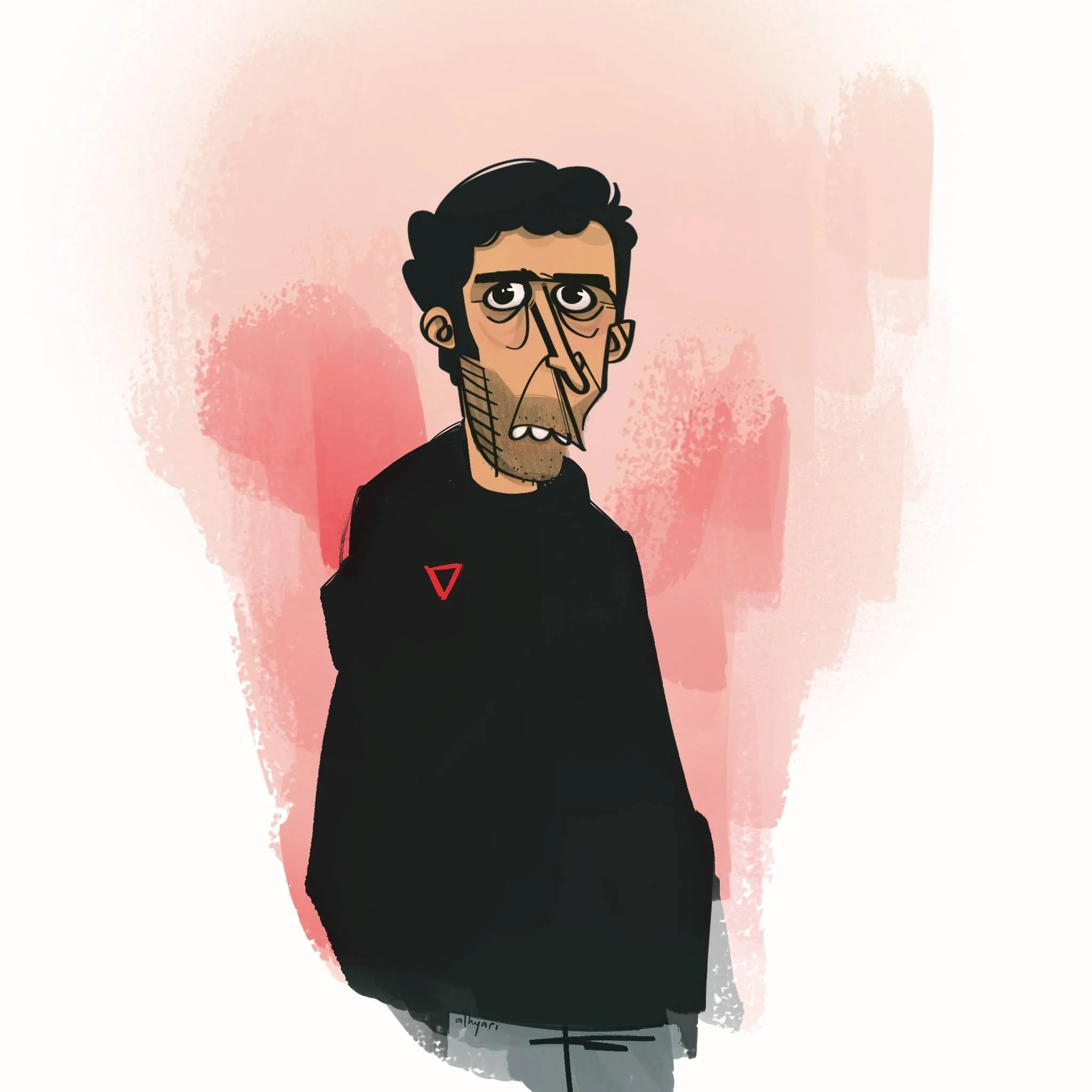
Never be afraid to push your reference photos for more whatever-you-call-this characters! 😄
Tip 6: Seek Feedback and Refine
Discord and Telegram groups have been invaluable for me – asking targeted questions (like “Does anything feel off?”) gets me feedback way beyond just “looks nice!”.
How people interact with your WIPs speaks volumes. Don’t just listen to words, watch how long they engage and which elements draw their eyes.
My wife and kids are a great help, especially for children’s book and game art. They notice what I often overlook. I sometimes get annoyed when they don’t like something (I worked on for long), but I know it’s not personal. After all, they’re the best early test for my work.
Bringing It All Together
Character design isn’t just about drawing – it’s about infusing them with personality and emotion that resonates. Let’s keep the conversation going! Share your favorite character design tips in the comments below 👇